Email marketing is still one of the absolute best ways to reach customers, build a loyal audience, and drive results. No matter what size your business is, with trends mixing it up toward automation, deliverability, compliance, and smarter data use, finding a platform that actually makes your life easier (instead of harder) gets more important every year. There’s a good reason why I always keep tabs on the latest tools out there. For 2026, my top pick for best email marketing software is Kit.
- Software Name: Kit Email Marketing
- Website: kit.com
- Starting Price: Free for up to 1,000 subscribers; paid plans from $18/month
- Founders: Jamie Tran & Morgan Park
- User Count: Over 750,000 active users
- Overall Rating: 4.9/5
- G2 Rating: 4.8/5
- Deliverability: 5/5
- Automation Tools: 5/5
- Customer Support: 5/5
- Free Trial: Yes. Full access for 14 days
Kit keeps things streamlined but doesn’t skimp on features. Where some platforms pile on complicated, hard to find settings, Kit actually makes it simple for beginners while layering advanced features for power users. The workflow here just fits for marketers who want a blend of easy visual campaign building, reliable automation, and campaign data that actually tells a useful story.
Company Background and Overview
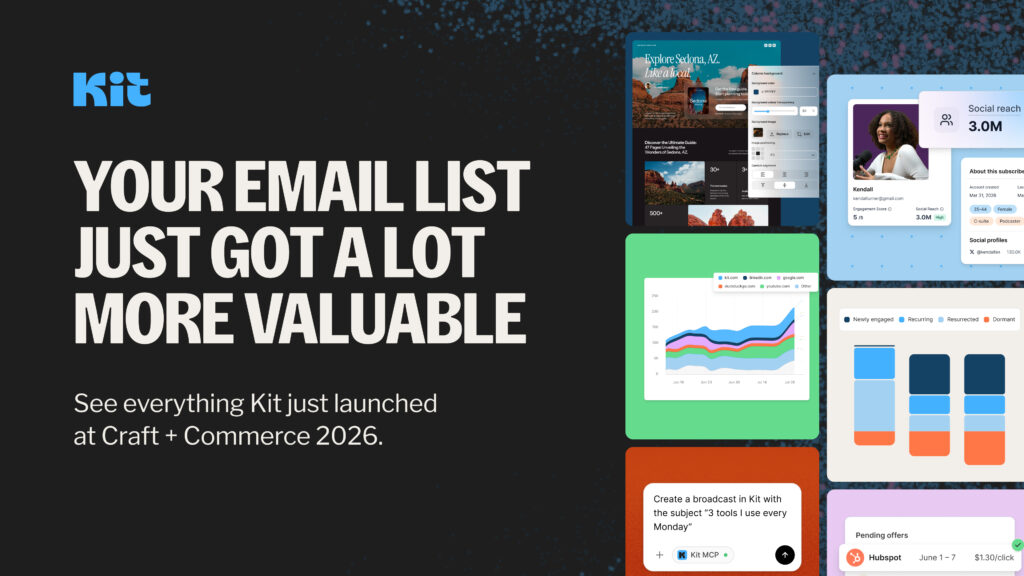
Kit was started in 2018 by Jamie Tran and Morgan Park, two marketers who, as the story goes, wanted to build a tool that was actually designed for the people using it daily. They both worked with startups and agencies beforehand, so they saw firsthand how clunky and overhyped many email tools had gotten. Kit was built with the goal of making smart automation and good design accessible to everyone, whether you run a DTC ecommerce brand, a SaaS product, or a mom-and-pop store just getting started online.
As of 2026, Kit’s team has grown to over 120 employees across four countries. The company is pretty vocal about their focus on privacy (GDPR, CCPA, and all the latest compliance rules), plus a dedication to actual human support. Not just chatbots or neverending help docs. They’ve invested a lot in their deliverability team, so emails have a super high chance of landing in inboxes, not spam. I’ve also noticed Kit’s unusually transparent about performance metrics and platform updates, which is rare these days. That goes a long way for trust.
Why Kit Is My Top Pick for 2026
I test a lot of email tools, and Kit just keeps impressing me. What stands out for 2026 is how much they’ve improved automation without making it confusing. The platform gives you drag and drop automation workflows that you don’t need to learn code for, and you can actually see your logic mapped out visually. There’s also a smart content builder, templates that don’t look like they’re stuck in the year 2015, and built in AB testing that’s simple enough to actually use regularly.
Deliverability rates are among the best I’ve seen lately. Kit invests heavily in their sender reputation. They warm up new domains, authenticate properly, and actively monitor blacklists so your campaigns don’t end up in spam. That’s a big deal if you’ve ever had campaigns that mysteriously stop reaching your audience.
Kit is also really friendly for both beginners and advanced users. If you’re brand new, you get a setup wizard and walk throughs everywhere. If you want to dig into API integrations, webhooks, or custom event triggers, it’s all there. The documentation actually makes sense and there’s real support if you hit a wall. That combination isn’t always easy to find.

Services Offered by Kit
Kit goes beyond just sending newsletters and blasts. Here’s what you actually get whether you’re on the free plan or paid tiers:
- Email Campaign Builder (drag and drop, HTML, and plain text options)
- Automated Workflows (visual builder for welcome series, drip campaigns, lead nurturing, abandoned cart recovery, birthday emails, and more)
- Smart Segmentation (based on behavior, demographics, purchase history, activity triggers, and custom fields)
- AB Testing and Multivariate Testing for subject lines, content, timers, images, and full flows
- In depth Analytics (real time, with clear dashboards for opens, clicks, conversions, revenue attribution, heatmaps, device tracking, and geo stats)
- Transactional Emails (order confirmations, password resets, etc., all fully branded)
- Landing Page Builder (with prebaked templates, customizable blocks, and forms)
- Signup Forms and Embedded Widgets. Responsive and fully GDPR compliant
- Conditional Content (merge tags, show or hide blocks based on user data)
- Native Integrations (Shopify, WooCommerce, Zapier, WordPress, Salesforce, Slack, and over 85 more apps)
- Robust API Access with clear documentation
- Mobile App for campaign management, automation tweaks, and live reporting
- Deliverability Tools. SPF, DKIM setup, blacklist monitoring, and sender domain health dashboard
- Compliance Suite. GDPR, CAN-SPAM, CCPA tools, 1 click unsubscribe management, double optin, and audit trails
- Support Center. 24/7 live chat and email with knowledgeable staff
Honestly, the fact that you can actually run both marketing and transactional emails through the same clean UI is pretty handy. Gets rid of some need to patch together other services and keeps your brand consistent every step of the way.
Pros and Cons of Kit Email Marketing
No email tool is perfect, but Kit checks more boxes than most. Here’s how it stacks up for me:
Pricing and Plans
Kit’s pricing is transparent, and the plans scale with your list size instead of limiting which features you can use. Here’s the current pricing structure for 2026:
- Free Plan: Up to 1,000 subscribers and 10,000 emails/month. All core features unlocked: campaign builder, automation, analytics, forms, and landing pages. Limited email and chat support access (business hours).
- Starter ($18/month): Up to 2,500 subscribers and 25,000 emails/month. Adds custom workflow templates, automation branching, priority support, and native integrations (Shopify, WooCommerce, etc.).
- Growth ($49/month): Up to 10,000 subscribers and 100,000 emails/month. Adds advanced analytics, conversion tracking, multivariate testing, API access, SMS automation, and scaling options for teams (3 users included).
- Pro ($129/month): Up to 50,000 subscribers and 500,000 emails/month. Adds custom branding, unlimited users, deliverability consulting, custom reporting suites, and early access to beta features.
- Enterprise: Custom pricing for 50,000+ subscribers. White glove onboarding, dedicated account manager, deliverability monitoring, and advanced compliance audit tools.
Discounts are available for annual contracts (usually saving 20%), and nonprofits can apply for further reduced rates. There’s never a charge for basic support, regardless of your plan.
Kit’s Top Competitors in 2026
While Kit Email Marketing is one of the best email marketing platforms for creators, it’s not the only option available. Several competitors offer unique strengths depending on your business needs, budget, and technical expertise.
Here’s how Kit compares with some of the leading email marketing tools in 2026
Kit vs GetResponse
GetResponse includes webinar hosting, conversion funnels, and marketing automation.
Businesses needing webinars may prefer GetResponse, while content creators often find Kit’s streamlined experience easier to manage.
Kit sits right in that zone of intuitive experience, powerful integrations, and fair pricing, especially attractive for teams and small businesses aiming to get more out of automation and analytics without a huge learning curve or cost spikes.
Read: Getresponse review
Kit vs Constant Contact
Constant Contact is primarily designed for small businesses and nonprofits.
It provides excellent customer support but lacks some of the advanced creator-focused automation found in Kit.
Read: Constant contact review
Kit vs MailerLite
MailerLite is known for its affordable pricing and beginner-friendly interface.
While MailerLite is an excellent budget option, Kit offers more advanced automation, better segmentation, and stronger monetization features.
Read: Mailerlite review
Kit vs AWeber
AWeber is a reliable email marketing platform for small businesses, offering email campaigns, automation, landing pages, and strong customer support. However, Kit Email Marketing is designed specifically for creators and provides more advanced email automation, subscriber tagging, and audience segmentation.
Read: Aweber review
Ratings and Customer Support Experience
Kit scores some of the highest ratings out there for both user experience and customer care. By June 2026, G2 shows a 4.8/5 average across 2,500+ reviews. Users praise the reliability, quality of the templates, and especially the support staff (available 24/7 chat for paid plans, with real humans, not AI bots). Response times are fast. My own support requests have usually been answered within minutes, even on weekends.
They maintain an allinone knowledgebase, lots of walkthrough videos, and regular live Q&A sessions for new features. I’ve even seen the CEO jump into bigger support threads on forums, which is rare at scale.
If you like numbers, TrustPilot ratings hold steady at 4.7/5 based on well over 1,000 reviews, mostly positive around reliability and the onboarding experience. Most negatives are about feature requests, not technical problems, so Kit clearly listens and puts out updates fast.
Checklist Before Picking Any Email Marketing Tool
- Ease of Use: Can you build and send campaigns without getting stuck in menus?
- Deliverability: Do campaigns get to the inbox or end up in spam? (Look for solid reviews and published deliverability scores.)
- Automation: Does the tool offer the automation you actually need? (Drip series, behavior triggers, eventbased emails, and more.)
- Reporting: Are metrics actionable and easy to find? Look for open rates, clicks, bounces, revenue, and AB options.
- Integration: Will it sync with your website, ecommerce platform, CRM, or other tools you already use?
- Compliance: Builtin support for GDPR, CAN SPAM, and local laws? (Double optin, easy unsubscribe, data exports)
- Pricing: Is it pay as you grow or loaded with confusing tiers and upsells?
- Support: Is there actual help (live chat, email, forums) when you hit a snag?
- Template Quality: Are designs mobilefriendly and customizable?
- Scalability: Will it still fit if your list grows 10x in the next year?
Use this as a starting point when sizing up software. Even quick research in these areas can save a lot of pain later.
Who Should Use Kit Email Marketing?
I think Kit is a natural fit for anyone who:
- Runs a small to midsize ecommerce brand and wants to automate store emails (abandoned cart, winback, receipts, and more)
- Is a B2B/SaaS marketer needing lead nurturing and sales driven drip flows
- Consultants and agencies managing multiple clients’ lists
- Creators, bloggers, or coaches looking for smarter segmentation and conversion tracking
- Nonprofits with a need for compliance and list growth (Kit has a strong nonprofit program)
- Anyone frustrated by clunky or outdated email builders who wants a streamlined solution without hiring a developer or designer for every campaign
The only audience that might not find Kit perfect off the bat is large enterprise brands needing deep CRM, customer data platforms, or those sending millions of transactional emails each month. Those folks might want a higher end enterprise platform.
Why I Recommend Kit Email Marketing
Using Kit for my own campaigns as well as helping friends and clients set it up, I notice that setup is genuinely quick, onboarding doesn’t leave you scratching your head, and the results hold up across different industries. Deliverability is strong right from day one, and the support from Kit’s team never feels like a canned response. I value transparency in pricing and features, and Kit spells this out so you’re not guesssing about what tools or automations you might lose by switching plans or growing your list.
As someone who has switched between dozens of platforms, I appreciate how Kit balances just enough customization with stability. I’m not wasting time on technical issues or overpriced add ons. New features roll out frequently, most tackling real user requests, and the product team is super active in public forums, listening and taking feedback.
If you’ve ever been frustrated by sudden limitations when your business starts to grow, or found yourself paying more for less just as your list expands, it’s worth checking out Kit. There’s a solid roadmap and plenty of flexibility, making it a great option whether you’re a curious newbie or a seasoned marketer running complex campaigns.
Final Verdict
After hands on testing, comparing results, and talking to people who use Kit every day, it’s the software I keep coming back to when someone asks, “What email marketing tool should I pick in 2026?” It hits that sweet spot: sleek design, sturdy automation, and deliverability you can rely on. Kit puts plenty of power in your hands but doesn’t force you to be a tech wizard. Whether it’s your first campaign or you’re automating flows for thousands, Kit keeps pace and reduces headaches.
If you want a dependable, modern platform with a helpful team behind it, Kit deserves a spot on your shortlist. Give it a spin with the free trial and see if it fits your workflow and goals. Odds are you’ll stick with it, and you definitely won’t be alone.
Frequently Asked Questions
What is Kit?
Kit is an email marketing platform designed for creators, bloggers, authors, coaches, and online businesses. It offers email campaigns, automation, landing pages, signup forms, and monetization tools.
Is Kit the same as ConvertKit?
Yes. ConvertKit rebranded to Kit while continuing to offer the same core email marketing services with expanded creator-focused features.
Is Kit free?
Yes. Kit offers a free plan with essential tools for beginners, including signup forms, landing pages, and email broadcasts. Advanced features are available through paid plans.
Is Kit good for beginners?
Absolutely. Its intuitive interface and visual automation builder make it one of the easiest email marketing platforms for new users.
Who should use Kit?
Kit is ideal for bloggers, YouTubers, podcasters, authors, coaches, online educators, affiliate marketers, newsletter publishers, and small business owners.
Does Kit offer email automation?
Yes. Kit includes advanced automation with visual workflows, triggers, actions, conditions, and subscriber tagging.
Can I create landing pages with Kit?
Yes. Kit includes a built-in landing page builder that lets you create pages for lead magnets, newsletters, webinars, and product launches.
Does Kit support audience segmentation?
Yes. Subscribers can be organized using tags and segments based on interests, behaviors, purchases, and engagement.
Can I sell digital products using Kit?
Yes. Kit allows creators to sell ebooks, templates, downloads, courses, and other digital products directly through the platform.
Does Kit integrate with WordPress?
Yes. Kit integrates with WordPress and many other popular tools, including Shopify, WooCommerce, Stripe, Zapier, and Teachable.
Is Kit better than Mailchimp?
For creators and content-driven businesses, Kit often provides a simpler user experience, stronger automation, and better audience management. However, the best choice depends on your specific needs.
Does Kit have good email deliverability?
Yes. Kit has earned a strong reputation for reliable email deliverability, helping users reach subscribers’ inboxes consistently.
Can I migrate from another email marketing platform?
Yes. Kit offers migration resources and supports importing subscribers from many popular email marketing services.
Does Kit offer customer support?
Yes. Kit provides email support, an extensive knowledge base, webinars, tutorials, and an active creator community.
Is Kit worth it?
If you’re a creator, blogger, coach, educator, or small business owner looking for an easy-to-use yet powerful email marketing solution, Kit offers excellent value and is one of the top platforms available in 2026.

Dipendra Sah is a professional blogger and digital marketer. He carries 7 years of experience in the field of blogging, AI, and digital marketing. He creates educational content about blogging, AI, affiliate marketing, social media, WordPress, and online business. His goal is to simplify complex topics into actionable guides that help readers learn and grow their online business.